Trailer Width
Measure the trailer you actually dispatch, compare it with the vehicle waiting at pickup, and resolve clearance questions before committing the truck.
By TruckTA Editorial Team · TruckTA Resources
In this article
Last updated: November 2026
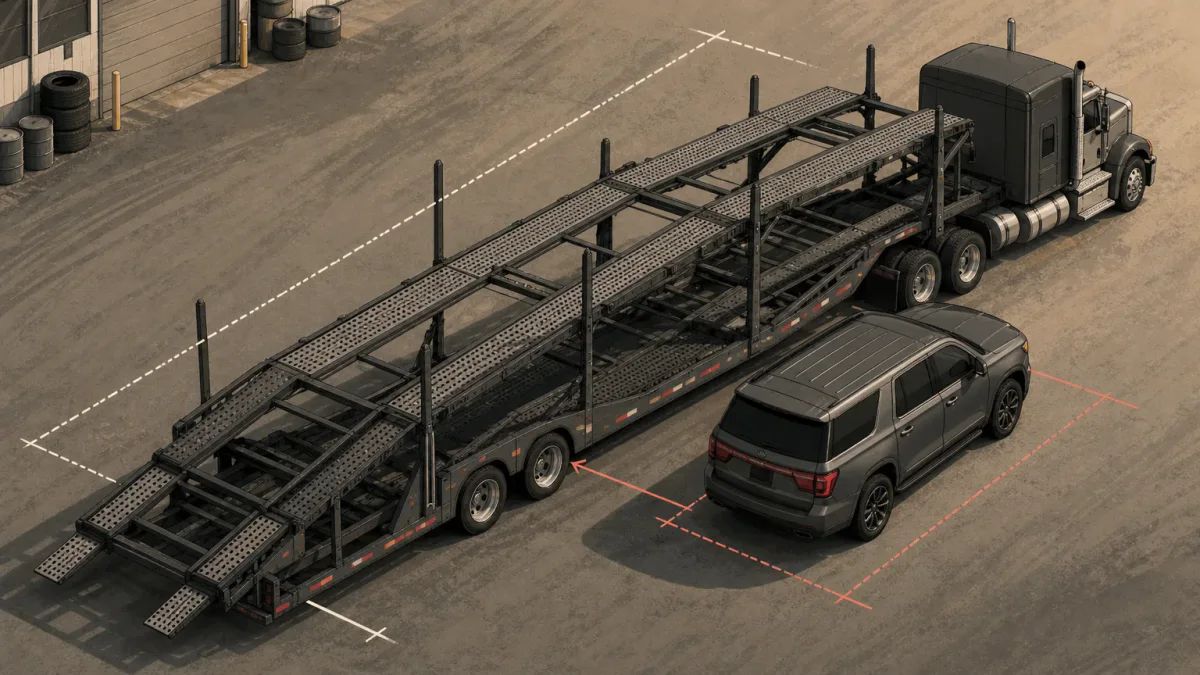
Your next pickup is a wide SUV, but the equipment listing says only “Trailer Width.” Ask for the outside measurement, usable deck or track space, and clearance along the loading path before assigning that unit. The measurement needs a location, not just a number.
Then compare those measurements with the actual vehicle, including its current configuration and condition. If you’re evaluating equipment to buy, use Fleet Lifecycle Management for the broader purchase decision. Here, start with the width questions that determine whether a trailer belongs on your shortlist.
Measure Trailer Width at the points that matter
Ask what the advertised dimension measures
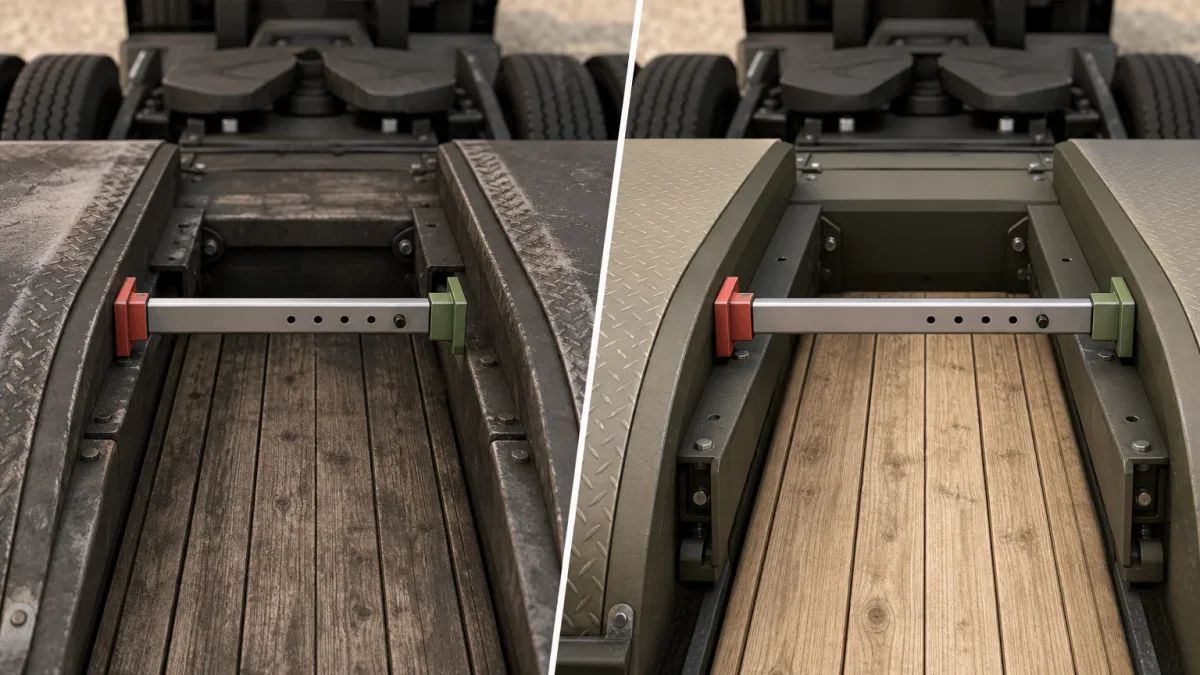
When you ask how wide a car hauler trailer is, specify the measurement you need. Ask the seller whether the quoted dimension describes the outside structure, loading surface, or opening between obstructions. Request a drawing for the exact configuration offered.
For example, identify both endpoints when discussing clearance beside a fender. Don’t accept “measured across the back” if your question concerns a forward loading position. Put the location beside the value so everyone compares the same space.
| Measurement | What to request | Decision it supports |
|---|---|---|
| Overall outside width | The dimension and its outer reference points | Identify the equipment’s outside envelope. |
| Usable deck or track width | Measurements at the proposed vehicle position | Screen the intended placement. |
| Clearance between obstructions | The opening beside fenders, rails, posts, or other fixed features | Identify a possible interference point. |
| Loading-path clearance | Relevant openings from ramp entry to final position | Review how the vehicle reaches its place. |
For an enclosed candidate, request entrance dimensions as well as interior measurements. For an open trailer, mark the relevant deck edges, tracks, fenders, and rails. Use the manufacturer’s instructions when reviewing the proposed loading arrangement.
Keep the measurement tied to the equipment
Record your trailer ID, configuration, measurement location, and who collected the information. Also, distinguish manufacturer specifications from field observations. A dispatcher should be able to tell whether an entry came from a drawing or a measurement taken in the yard.
Keep an image showing the measurement endpoints with the working notes. However, don’t leave the image to explain itself. Identify which side, opening, or loading position it shows, especially when several similar trailers share the yard.
If the drawing and field measurement disagree, send the discrepancy to the seller or manufacturer. Ask them to identify the correct configuration and explain the difference. Leave that entry unresolved rather than choosing whichever value makes the load look easier.
Screen the actual vehicle before promising pickup
Replace “SUV” with details you can compare
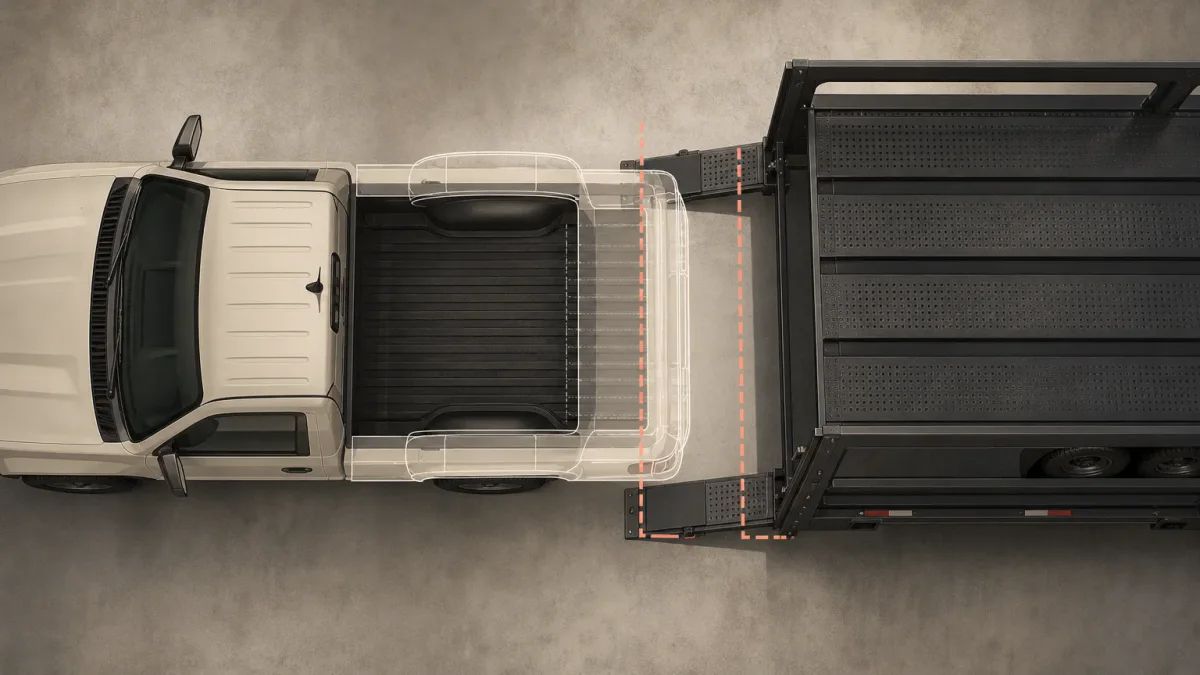
Treat Trailer Width as an early screening item on a brokered load. Ask for the vehicle identity, configuration, and relevant modifications. When clearance remains uncertain, request current measurements and images before promising pickup with a particular trailer.
For example, ask whether the vehicle has aftermarket wheels, body accessories, or damaged panels near the proposed loading path. Request information about the unit waiting at pickup, rather than relying only on a stock model description.
Next, compare the vehicle’s relevant outside points with the proposed position and approach. Mark the unresolved location clearly: beside the fender, through the entrance, or between fixed rails. “Might be tight” gives the next person nothing useful to investigate.
Give your driver the vehicle details and equipment drawing together. Ask which part of the arrangement needs further review. Refer technical compatibility questions to the manufacturer or an appropriate equipment specialist rather than asking dispatch to improvise an answer.
Assign the unanswered question before the gate closes
Your dispatch board should distinguish a completed fit review from information still pending. Assign someone to obtain the missing measurement and set a follow-up point before confirming the appointment. Don’t leave the question buried in a broker message thread.
If ownership is unclear, use Car Hauler Dispatcher Responsibilities: Assignment to POD when assigning the follow-up. Name who contacts the pickup location, who reviews the response, and who tells the broker whether the equipment assignment will change.
Suppose the gate is closing early and nobody has answered the clearance question. Instead of promising that the driver will figure it out, explain exactly what remains unknown. Discuss rescheduling, different equipment, or declining the assignment before sending the truck.
At pickup, compare the actual vehicle with the information used for booking. If it differs, document the discrepancy alongside the condition report and request reassessment. Keep the description specific, such as an accessory absent from the supplied images.
After the question is resolved, record the vehicle and trailer configuration covered by the decision. Avoid blanket notes such as “SUVs fit.” Give the next dispatcher the actual assignment reference, not a general promise about an entire vehicle category.
Verify road requirements and site access
Take the loaded configuration to the responsible authority
FHWA states that national vehicle size standards apply on the National Network of highways (opens in a new tab). Before dispatch, verify current width requirements with the responsible state transportation authority. Provide the planned roads and details of the actual loaded combination.
Also, ask how the authority measures width and which exclusions apply to your movement. Identify the roads connecting the main highway with pickup and delivery. Keep the response with the trip planning notes, including any question that still needs an answer.
For a Trailer Width question involving possible oversize permitting, ask the state authority about the proposed movement. FHWA states that the federal government does not issue permits for oversize or overweight vehicles; this is a state option (opens in a new tab).
Then ask whether a permit is available for that configuration and route, and what current conditions would apply. Keep the equipment assignment pending while that question remains unresolved. Don’t budget or promise pickup around an assumed permit.
Call about the transporter entrance
Separately, ask your pickup and delivery contacts which entrance receives transporters. Request details about the gate opening, approach, fixed obstructions, and loading location. “Trucks come here” isn’t enough information to plan an unfamiliar arrival.
For a tight location, request current entrance images and ask about temporary obstructions. Describe the equipment you intend to send. If the contact proposes another meeting point, confirm permission and access arrangements before changing the destination.
Finally, put the entrance instructions in the driver’s assignment rather than leaving them in your call notes. Include the site contact and unresolved questions. If conditions differ on arrival, have the driver report the difference before dispatch revises the plan.
Build a reference the next dispatcher can use
Make the answer easy to retrieve
Create a Trailer Width reference for each unit your team dispatches. Lead with the equipment ID and configuration, then show the measurements collected earlier. Keep open questions visible so an incomplete entry doesn’t look like a finished equipment review.
Put the quick reference where dispatch can retrieve it during a broker call. Meanwhile, retain the supporting drawings and measurement images separately. Link each working entry to its evidence rather than making someone search through unrelated service invoices.
Use plain descriptions for measurement locations. “Clearance between forward fenders” is more useful than “inside measurement.” Also, keep equipment-specific notes under that unit’s identity instead of relying on nicknames such as “the wide trailer.”
Keep completed vehicle comparisons tied to their original assignments. Record what information you received and the arrangement considered. Treat those examples as references for similar inquiries, not as replacements for checking a different vehicle.
Test the handoff without coaching
Give someone who didn’t collect the measurements a sample load description. Ask them to locate the candidate trailer, relevant opening, and outstanding questions. Watch where they hesitate rather than explaining the record as they work through it.
For example, an unlabeled image may leave them guessing which loading position it shows. Correct that specific gap in the reference. Then repeat the exercise with another assignment instead of adding a long procedure nobody needs during a call.
Remove superseded versions from the active reference while retaining useful history separately. Identify who owns updates and where dispatch should send corrections. Otherwise, a corrected drawing may sit in an inbox while the team keeps using an older copy.
When you substitute trailers, repeat the comparison using the replacement unit’s own information. Document the changed assignment before handing it to the driver. Don’t transfer the original decision simply because both trailers share an advertised size description.
Decide whether different equipment solves the problem
Compare candidates against the same work
Before buying equipment, pull representative vehicles from recent loads and upcoming customer requests. Include the awkward assignments you want to accept. Then compare car hauler trailer sizes against that same vehicle set, not different examples supplied for each candidate.
If your shortlist includes a gooseneck, wedge, or enclosed trailer, request configuration-specific drawings. Ask each seller to identify the proposed vehicle positions. Keep installed accessories and the intended tow vehicle in the discussion rather than comparing sales labels.
Review declined and reassigned loads before blaming Trailer Width for missed work. Separate confirmed clearance problems from missing vehicle information, unsuitable appointments, and weak rates. Classify an unanswered measurement request as an information gap, not proof that you need another trailer.
For a confirmed fit problem, retain the vehicle details and completed comparison. Ask the seller to address that specific assignment with the proposed equipment. Also, involve your driver before committing to a purchase, while unresolved questions can still change the shortlist.
Price the work the candidate could actually take
Next, compare acquisition and operating estimates with work you can reasonably assign. Use your records and quotes for deadhead, loading time, maintenance, and idle periods. Keep expected customer demand separate from loads already available to your fleet.
Include pickup locations and likely return lanes in the comparison. However, don’t credit the candidate with every previously declined load. Exclude work whose vehicle fit remains unresolved, and identify assumptions that depend on a customer changing its equipment requirements.
Use Car Hauler Truck and Trailer Cost Tracking Checklist: Month-End Review when organizing the expense review. Keep purchase estimates separate from actual expenses, then compare them after the equipment begins working. Record whether the expected assignments materialized.
Start with a trailer you already dispatch and an awkward pickup request. Complete the missing measurements, resolve the vehicle questions, and test the handoff. Use that same comparison format for the purchase candidate so the buying decision rests on identifiable work.
Explore equipment workflows by trying TruckTA for truck and trailer records and cost tracking. Start with the unit you just evaluated: organize its equipment record and costs before deciding which trailer your fleet should add next.
Frequently asked questions
What should I do if a used trailer has no dimension drawing?
Ask the seller for the equipment identity and configuration details, then contact the manufacturer for documentation. Arrange a measurement review before committing to the purchase. Keep technical compatibility questions open until the manufacturer or an appropriate equipment specialist addresses them.
Should I review dimensions after repairs or modifications?
If the work affects ramps, fenders, deck geometry, or relevant clearances, ask the repairer and manufacturer which measurements and instructions need updating. Revise the active equipment reference before using the changed configuration for another fit review.
How should dispatch handle measurements supplied in different units?
Choose a standard unit format and label every measurement. Retain the original value beside any conversion, and avoid rounding to make a comparison easier. Have another team member check the conversion before using it to evaluate clearance.
Put it into practice
Keep your operation moving with TruckTA.
Bring loads, drivers, documents, payments, and settlements into one connected workspace.