Loading a Non-Running Car: A Go/No-Go Workflow for Car Haulers
Build a pickup decision around what the vehicle can actually do. Check movement, winch setup, loading clearance, condition photos, and separate transport securement before dispatch releases the load.
By TruckTA Team · Product guidance
In this article
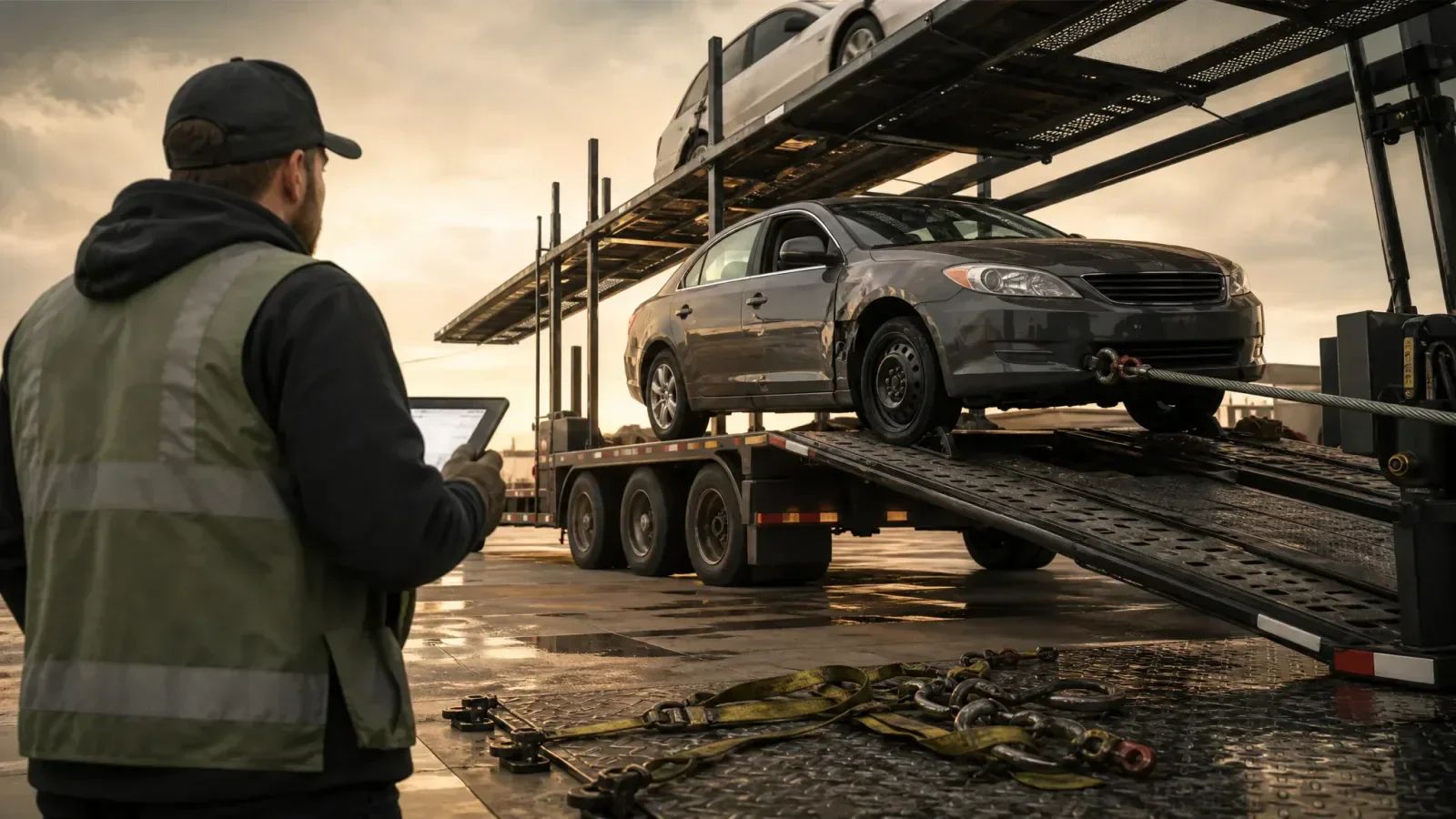
The dispatch board says “inoperable,” but that doesn't tell you whether the car has a dead battery, locked wheels, damaged steering, or no usable brakes. Before committing to the pull, replace that label with an observed condition and a loading plan.
Use the workflow below to decide whether to load, hold for a correction, or decline the pickup with your assigned equipment. It's an operating framework, not a universal rigging procedure. Check the current instructions for the specific vehicle, trailer, winch, and accessories before acting.
1. Verify movement and document the car before touching it
Before dispatch sends the truck, ask the pickup contact for specific answers: Are the keys available? Can the transmission be placed in the manufacturer's loading position? Do all wheels rotate? Can the front wheels be directed? What is known about the service brake and parking brake? Request photos of damaged wheels, low bodywork, and the space around the vehicle.
At pickup, verify those answers without creating uncontrolled movement. Keep the vehicle restrained while preparing it for loading. For example, Tesla's Model 3 transporter instructions require securing the vehicle before activating Tow Mode, which leaves it free-rolling. That is a model-specific procedure, not a reason to put every non-runner in neutral. (tesla.com (opens in a new tab))
Does a non-running car need to roll, steer, and brake? For this workflow, treat any missing or unverified function as a hold until a qualified operator establishes an equipment-specific alternative. Do not approve an ordinary winch pickup based only on “it rolls.” Establish how you'll control direction, stop movement, and keep the car stationary during each transition.
Take condition photos before attaching equipment: vehicle identification, all sides, wheels, existing damage, accessible low-clearance areas, and the proposed pulling attachment. Pair close-ups with wider views that show location. Record what you cannot inspect. Ask the pickup representative to acknowledge discrepancies on the condition report; document any refusal without turning it into an argument.
In an illustrative case, dispatch books a dead-battery sedan, but you find a locked front wheel and a bent control arm. Report those observations instead of diagnosing the cause. Put the pickup on hold while dispatch arranges an appropriate recovery assessment.
2. Approve the winch setup and the entire loading path
Review the winch, rope, mounting arrangement, connectors, and pulling attachment as one setup. Confirm ratings and manufacturer instructions for the intended pull. Inspect the rope, hook, and slings; remove damaged gear from use. WARN's Basic Guide to Winching prohibits exceeding winch or rope capacity and warns against side pulls. Follow your equipment's instructions rather than improvising a redirect. (warn.com (opens in a new tab))
Identify the vehicle-approved pulling point before connecting. Tesla's Model 3 instructions, for example, specify a properly installed tow eye for pulling onto a flatbed and warn against pulling from chassis, frame, or suspension components. Do not transfer that instruction to another model without checking its manual. (tesla.com (opens in a new tab))
Walk the loading route from the parking spot to the final deck position. Include the initial approach, ramp entry, ramp-to-deck transition, and clearance beside vehicles already loaded. Check tire alignment, body clearance, surface condition, and access for the eventual tie-downs. Make any unresolved clearance question a hold, not something to test under increasing winch tension.
Set up and stabilize the carrier according to its manual. Verify that ramps are correctly seated and retained before loading. Brian James Trailers' loading instructions specifically call for engaging the ramps' captive locating mechanism; your wedge or gooseneck may use different hardware. Inspect the actual retention arrangement rather than assuming a ramp resting against the deck is ready. (brianjamestrailers.com (opens in a new tab))
Assign the controls and spotting responsibilities before movement. Agree on one stop signal and where each person will stand. Your plan should also explain unloading at delivery: who will receive the car, what equipment will be available, and how movement will remain controlled.
3. Make a controlled pull with clear stop conditions
Keep everyone clear of the rope and moving load. Never touch a tensioned rope or hook, step over the loaded line, or disengage the clutch under load. WARN also directs operators to keep hands clear of the fairlead and use appropriate protective equipment when handling rope. (warn.com (opens in a new tab))
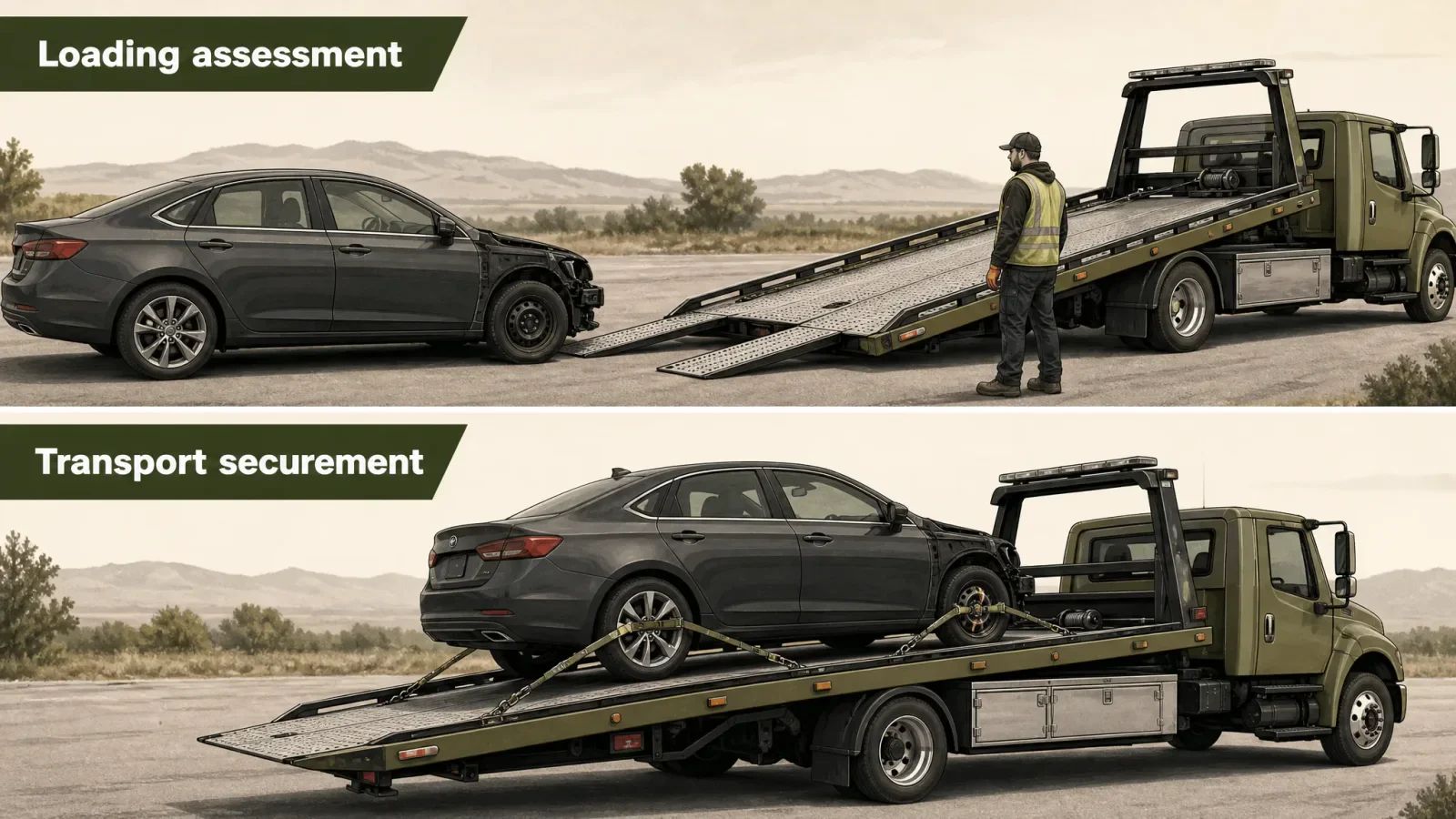
Begin the pull using the manufacturer's operating procedure. Watch wheel tracking, ramp seating, vehicle clearance, and rope behavior throughout movement. Stop if a wheel stops rotating, the car moves off its intended path, bodywork approaches contact, equipment shifts, or communication with the spotter is lost. Do not continue merely because the car is nearly on the deck.
Before anyone approaches to inspect or adjust the setup, secure the vehicle against unintended movement using the equipment-specific procedure. Never send a helper into the travel path to push a tire or correct alignment during the pull.
Record a stopped pull as an exception. Photograph the problem from a safe position and describe what changed. Dispatch needs “left-front wheel stopped rotating at ramp entry,” not “winch won't do it.” Resume only after the cause has been assessed and a suitable correction completed.
4. Complete transport securement as a separate job
A winch moves the vehicle; it does not replace transport tie-downs. WARN expressly prohibits using a winch to secure a load. Do not treat a taut cable as completed transport securement. (warn.com (opens in a new tab))
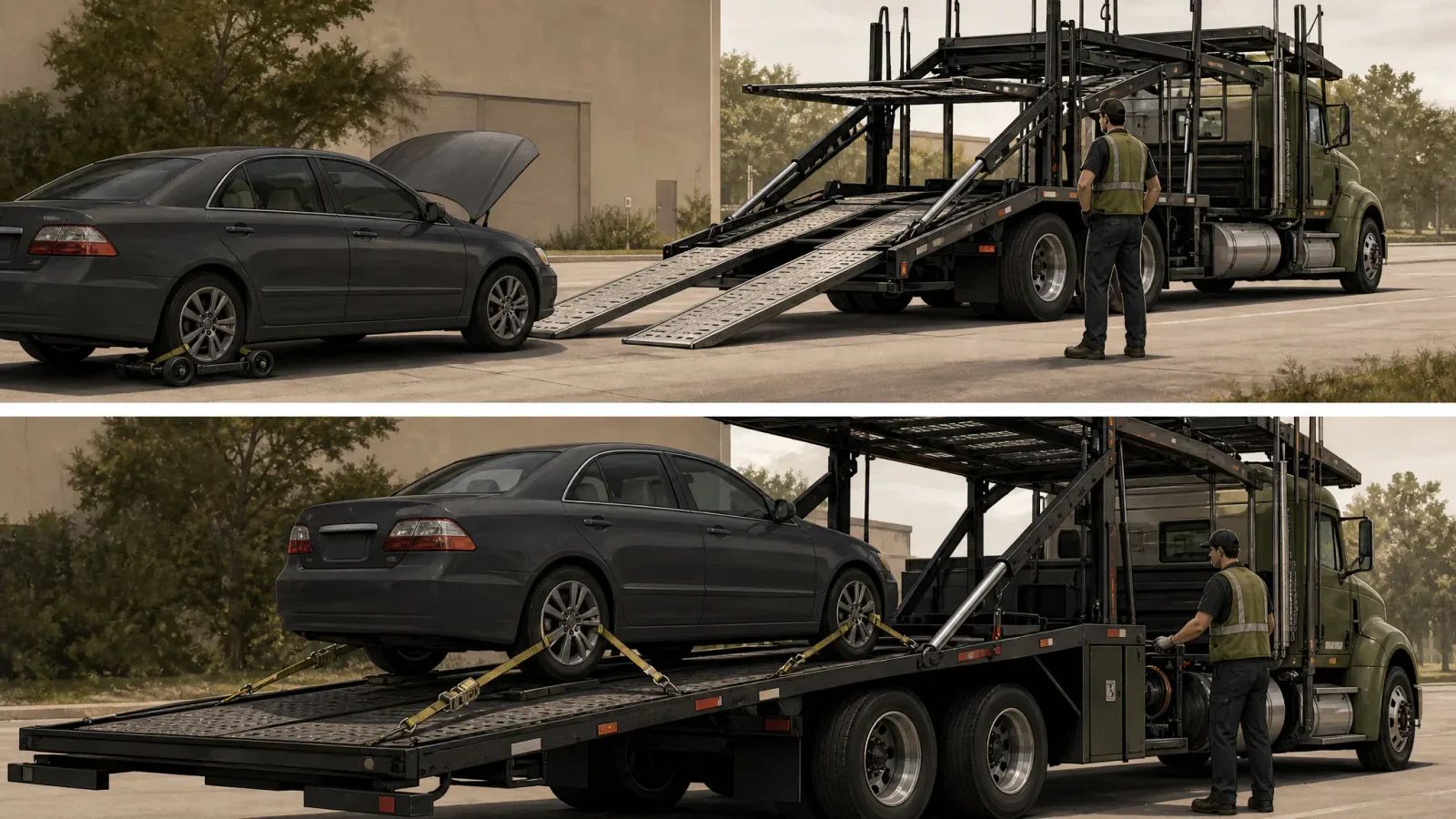
Before releasing winch tension or disconnecting, establish independent restraint against vehicle movement under the applicable equipment instructions. Complete the vehicle's transport securement using the appropriate rated system and attachment method. Have the carrier's responsible person confirm the applicable current securement requirements; this workflow does not prescribe a universal strap count or legal minimum.
Make the release review separate from the loading review. Check each restraint's routing, attachment, tension, and contact with the vehicle against the applicable instructions. If damage prevents the planned securement method, stop and escalate rather than substituting an unverified attachment.
Photograph the final vehicle position and each securement location. Compare the visible condition with the pre-load photos, record any new concern, and stow the loading equipment. Brian James Trailers' instructions require returning ramps to storage and securing them with the provided pins. Follow the equivalent procedure for your carrier. (brianjamestrailers.com (opens in a new tab))
5. Give dispatch a load, hold, or decline decision
Use three distinct statuses. Load means the assessed task fits the equipment and operator capability. Hold means a specific condition must be resolved and rechecked. Decline with assigned equipment means the pickup needs a different method or recovery resource. Dispatch approval must not override an unresolved equipment or safety limitation.
Before closing the exception, work through one release checklist:
Checklist
0 of 6 done
For a brokered load, send the condition mismatch, supporting photos, requested remedy, and schedule impact together. Ask for written authorization for changed services or charges before agreeing to them. Record arrival, hold, and release times without promising that detention or an inoperable surcharge will be paid.
Use TruckTA to organize and improve this workflow. Start by standardizing the load, hold, and decline language your drivers and dispatchers use, then review the next inoperable pickup against the same release checklist.
Editorial references
Sources checked
Requirements can change and may depend on jurisdiction, vehicle, weight, operation, and driver status. Confirm current applicability with the responsible agency or a qualified adviser.
- GetReportNationalTableai.fmcsa.dot.gov · checked October 5, 2026
- NumViolsDESCai.fmcsa.dot.gov · checked October 5, 2026
- VehicleMaintai.fmcsa.dot.gov · checked October 5, 2026
- brianjamestrailers.combrianjamestrailers.com · checked October 5, 2026
- Cargo securement rulesfmcsa.dot.gov · checked October 5, 2026
- Development of a North American Standard for Protection Against Shifting and Falling Cargo 508CLNfmcsa.dot.gov · checked October 5, 2026
- SFD NPRM 01 14 16fmcsa.dot.gov · checked October 5, 2026
- tesla.comtesla.com · checked October 5, 2026
- warn.comwarn.com · checked October 5, 2026
Put it into practice
Keep your operation moving with TruckTA.
Bring loads, drivers, documents, payments, and settlements into one connected workspace.