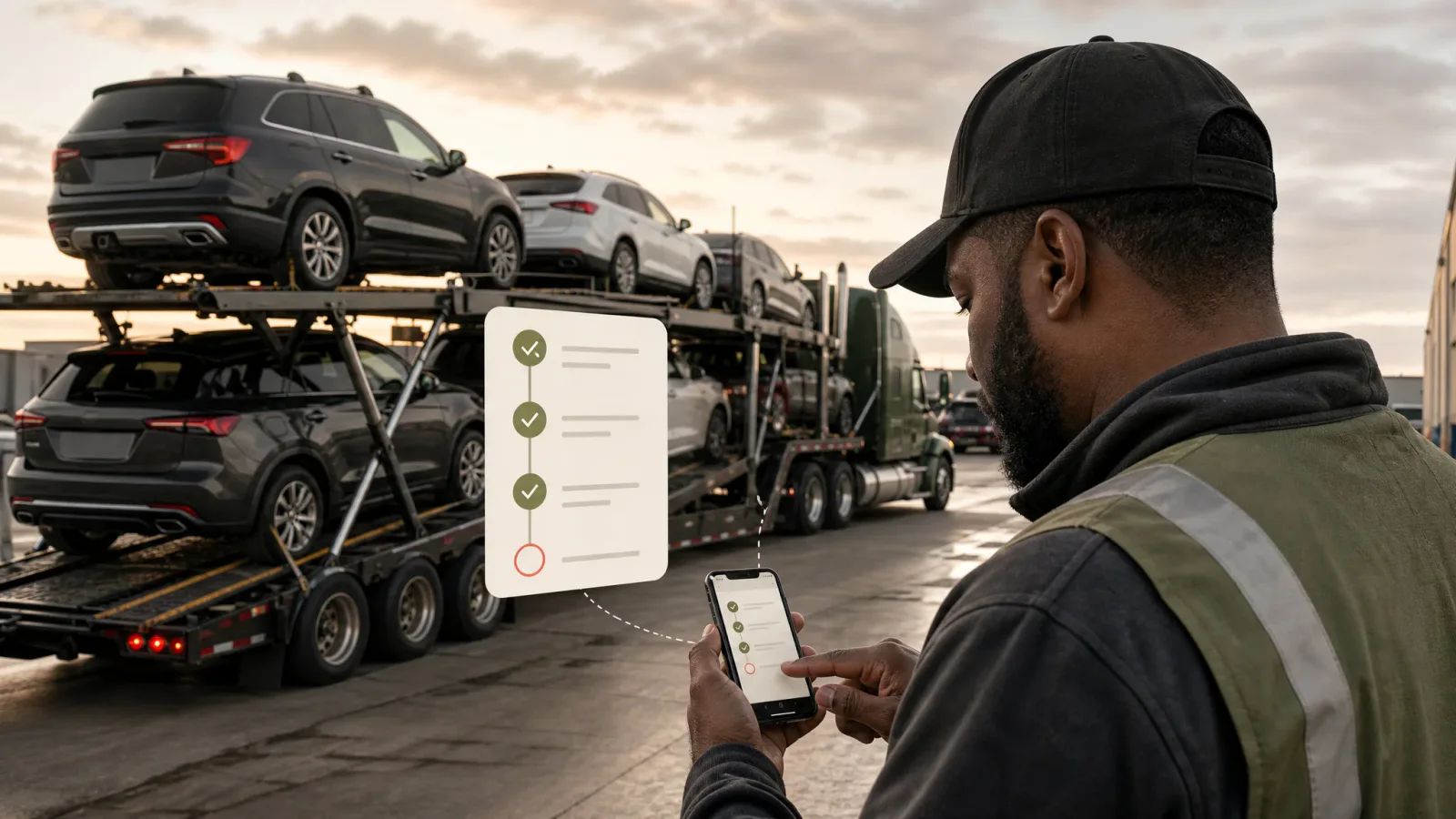
How to Use a Car Hauler Pickup Identity Verification Checklist
Use a shared dispatch-and-driver checklist to verify the broker, carrier, driver, equipment, vehicle identifiers, and pickup paperwork before cars change hands.
By TruckTA Editorial Team · TruckTA Resources
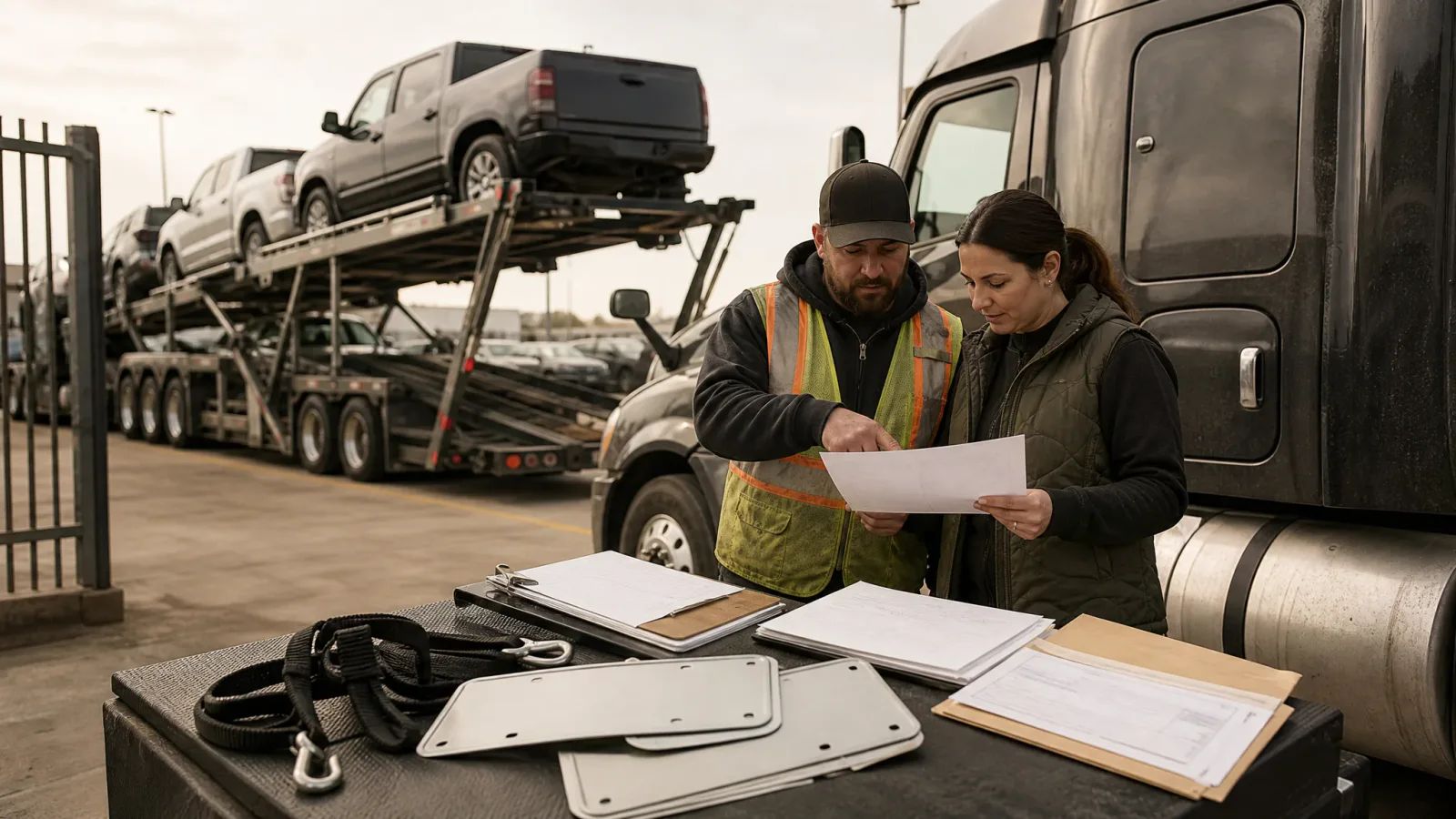
In this article
- 1. Car hauler pickup identity verification checklist: verify the transaction before arrival
- 2. Carrier packet and load-document match
- 3. Driver checklist: confirm the people and equipment at pickup
- 4. The shared dispatch-and-driver release review
- 5. What to do when the pickup doesn’t match
- 6. Build the identity check into the load file
- 7. Frequently asked questions
- 8. Related TruckTA resources
A rate confirmation can look legitimate and still send the wrong person to the pickup. The broker contact may be spoofed, the carrier packet may belong to another company, or the tractor and trailer may not match the equipment described in the load file. Once vehicles are released, recovering them and sorting out who was authorized to move them gets much harder.
Use this car hauler pickup identity verification checklist as a shared stop-work review. Dispatch handles the remote checks before the truck arrives. The driver confirms the people, equipment, and paperwork at the gate or yard. If a critical item doesn’t match, pause the pickup and escalate it before accepting or releasing vehicles.
Car hauler pickup identity verification checklist: verify the transaction before arrival
The driver shouldn’t be the first person to discover that the phone number on the rate confirmation doesn’t belong to the broker or that the carrier assigned to the load has changed. Dispatch should build a clean identity trail before sending pickup instructions.
Checklist
0 of 6 done
A search-engine result isn’t enough by itself. FMCSA warns that fake profiles and copied contact information can appear in search results, so the number and company identity should be checked against more than one reliable source when a transaction is in doubt.
Carrier packet and load-document match
Checklist
0 of 6 done
Document review is a fraud-prevention step, not just a billing task. The supplied FMCSA guidance specifically cautions that documents, including insurance certificates, can be fraudulent. If a document raises questions, research the identifiers and call the relevant company using contact information you independently confirmed.
Driver checklist: confirm the people and equipment at pickup
The driver’s job is not to conduct a full carrier investigation from the cab. It is to compare what physically arrived with what dispatch authorized, then stop when the comparison fails. A clean condition report doesn’t fix an identity mismatch.
Checklist
0 of 10 done
The shared dispatch-and-driver release review
Before the first car changes hands, dispatch and the driver should complete the same short review. This keeps the decision from resting on one rushed phone call at the gate.
Checklist
0 of 6 done
Record the time of the check, the names of the people involved, the phone numbers used, the equipment identifiers, and the documents reviewed. FMCSA encourages driver and vehicle logs and says that recording tractor and trailer plate information, along with photographs, can help identify the actual carrier if a fraudulent load is later investigated.
What to do when the pickup doesn’t match
Checklist
0 of 7 done
Don’t hold vehicles hostage or improvise a payment solution because the transaction is disputed. FMCSA states that a carrier involved in a fraudulently brokered load may itself be a victim and warns that holding loads hostage until payment is received is illegal. Follow the verified parties’ instructions and preserve the record for the dispute.
Build the identity check into the load file
A pickup identity check works best when it’s part of the dispatch workflow, not a memory test for a driver under appointment pressure. Put the verification fields beside the rate confirmation: verified broker phone, confirmation time, contracted carrier, driver, tractor plate, trailer plate, pickup representative, vehicle identifiers, document images, and escalation status.
Use this checklist as a shared dispatch-and-driver stop-work review before releasing vehicles at pickup. The load can wait a few minutes for a verified answer. It can’t easily wait after the wrong carrier has driven away.
Frequently asked questions
What should a driver verify before loading cars?
The driver should verify the pickup representative, contracted carrier name, tractor and trailer identifiers, plates, vehicle VINs or stock numbers, gate-release paperwork, condition documents, and the load instructions supplied by dispatch. Any material mismatch should be escalated before vehicles are loaded or released.
How do you verify a carrier at vehicle pickup?
Compare the carrier name and operating identifiers on the load documents with the driver’s information, truck markings, tractor plate, trailer plate, and facility paperwork. Dispatch should also confirm the carrier or broker contact through a trusted number, including the number listed in SAFER when applicable.
Why should dispatch and the driver perform separate identity checks?
Dispatch can verify the transaction and contact information before arrival, while the driver can confirm what is physically present at the pickup. Using both checks catches problems that may not appear in a carrier packet or rate confirmation.
What should a car hauler do when the tractor or trailer doesn’t match the paperwork?
Stop the pickup or release process and contact dispatch through the normal company channel. Document the equipment numbers, plates, photographs, people present, and paperwork, then obtain confirmation from an authorized and independently verified contact before proceeding.
Does FMCSA’s broker transparency proposal change this pickup checklist?
The supplied FMCSA transparency document is a notice of proposed rulemaking, not a statement that the proposed changes are currently effective. Treat transaction-record access as a separate review point and verify the current rule and agency guidance before relying on any proposed deadline or procedure.
Related TruckTA resources
Editorial references
Sources checked
Requirements can change and may depend on jurisdiction, vehicle, weight, operation, and driver status. Confirm current applicability with the responsible agency or a qualified adviser.
- Broker and carrier fraud and identity theftfmcsa.dot.gov · checked August 28, 2026
- Docket no fmcsa 2023 0257 rin 2126 ac63 transparency property broker transactionsfmcsa.dot.gov · checked August 28, 2026
Put it into practice
Keep your operation moving with TruckTA.
Bring loads, drivers, documents, payments, and settlements into one connected workspace.