How to Verify a Broker Before Accepting a Car Haul Load
Use this pre-acceptance workflow to compare broker identity, contact information, authority signals, equipment details, and payment terms before committing a car-haul move.
By TruckTA Editorial Team · TruckTA Resources

In this article
- 1. Why verification belongs before load acceptance
- 2. Step 1: Collect the complete counterparty packet
- 3. Step 2: Compare phone, company, and authority details
- 4. Step 3: Compare the equipment and pickup instructions
- 5. Step 4: Test the rate and payment terms
- 6. Step 5: Make a go, pause, or no-go decision
- 7. Step 6: Retain the verification record
- 8. FAQ
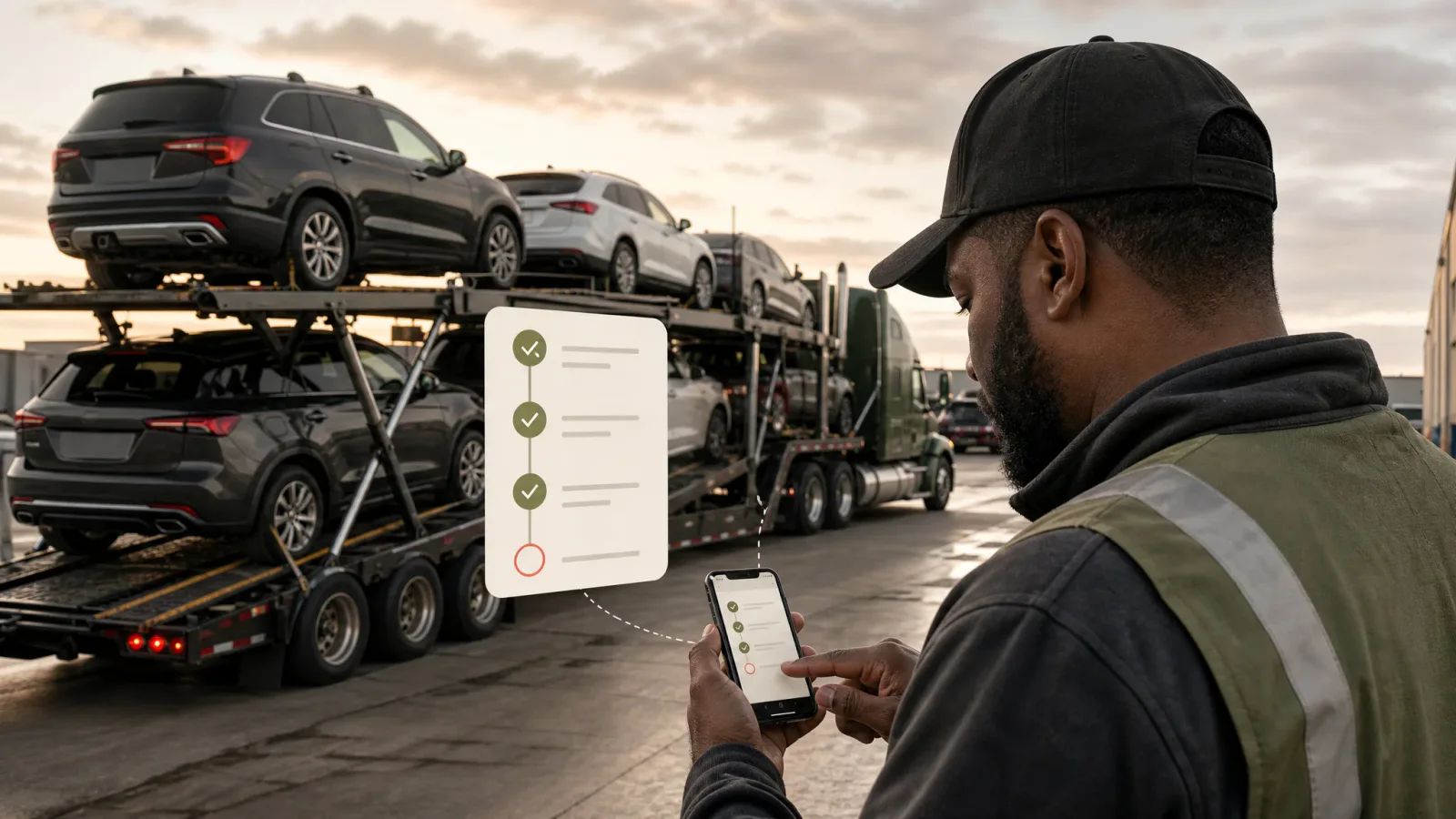
A high-paying car-haul load can turn into a payment dispute, stolen identity problem, or equipment mismatch before the driver ever reaches the gate. The fix is simple but has to happen before acceptance: make broker and load verification a required checkpoint on the dispatch board, not an informal phone call when the truck is already rolling.
FMCSA warns that fraud can involve someone using another motor carrier’s USDOT number or acting as a broker without the required registration. Its prevention guidance specifically recommends confirming phone numbers through SAFER, checking information across multiple sources, examining documents, and stopping when the offer or instructions don’t make sense. (fmcsa.dot.gov (opens in a new tab))
Why verification belongs before load acceptance
Once a carrier accepts a load, the operation starts spending money. You may turn down another lane, reserve a driver’s HOS, reposition a wedge or gooseneck, and commit to pickup appointments. If the counterparty’s identity is wrong, those decisions become harder to unwind.
A verification check also protects the driver. The person dispatched to the pickup needs accurate shipper instructions, vehicle details, contact names, and release information. A broker packet that doesn’t match the person or company sending the load should be treated as an open issue, not paperwork to clean up later.
Step 1: Collect the complete counterparty packet
Before discussing whether the rate works, collect the information you’ll use to verify the offer. Ask for the following in writing, preferably from a company email address that matches the business name:
- Legal company name and any trade name used on the rate confirmation.
- Broker or carrier MC number and USDOT number, if applicable.
- Main office phone number, representative’s direct number, email address, and physical or mailing address.
- Rate confirmation, pickup and delivery locations, appointment windows, vehicle count, VINs or stock numbers, and special handling instructions.
- Payment terms, approved payment method, required paperwork, detention terms, and the person responsible for billing questions.
- Names and contact information for the shipper, pickup location, delivery location, and any after-hours contact.
Don’t accept a screenshot with only a first name and a mobile number when the load is being represented as a commercial brokered move. The goal isn’t to demand unnecessary personal information. It’s to create enough of a record to compare the offer against independent business records.
Step 2: Compare phone, company, and authority details
Use the company name, MC number, and USDOT number to locate the business in FMCSA’s public systems. SAFER’s Company Snapshot can be searched by DOT number, MC/MX number, or company name and provides company identification information. FMCSA also directs users to confirm broker and carrier phone numbers through SAFER. (safer.fmcsa.dot.gov)
- Compare the legal name and address in the rate confirmation with the FMCSA record.
- Compare the phone number supplied by the representative with the number displayed in SAFER.
- Call the published number independently. Ask to be connected to the representative or to confirm that the company is handling the specific load.
- Check the current authority or registration information through the applicable FMCSA search tools. Do not rely only on an emailed certificate, copied carrier packet, or search-engine result.
- Compare the email domain and website with the business identity. A free email address, look-alike domain, or recently changed contact information warrants an owner review.
FMCSA cautions that a number supplied by a broker or carrier may not match the number posted in SAFER. Its guidance says to call the number posted in SAFER to discuss the load, and to consider not contracting when a SAFER record has no visible phone number until the transaction can be confirmed. FMCSA also warns that search-engine results can include fake profiles, so information should be confirmed across multiple sites. (fmcsa.dot.gov (opens in a new tab))
An authority check is not a payment guarantee. It only addresses one part of the decision: whether the identity and registration signals are consistent enough to continue the conversation.
Step 3: Compare the equipment and pickup instructions
Car-haul fraud can expose a mismatch between the carrier contracted on paper and the rig that arrives at the pickup. Before dispatch, compare the equipment description in the load paperwork with what your company will actually send.
- Trailer type and capacity: wedge, open, enclosed, or another configuration.
- Number of vehicles and approximate dimensions, weights, operability, and clearance issues.
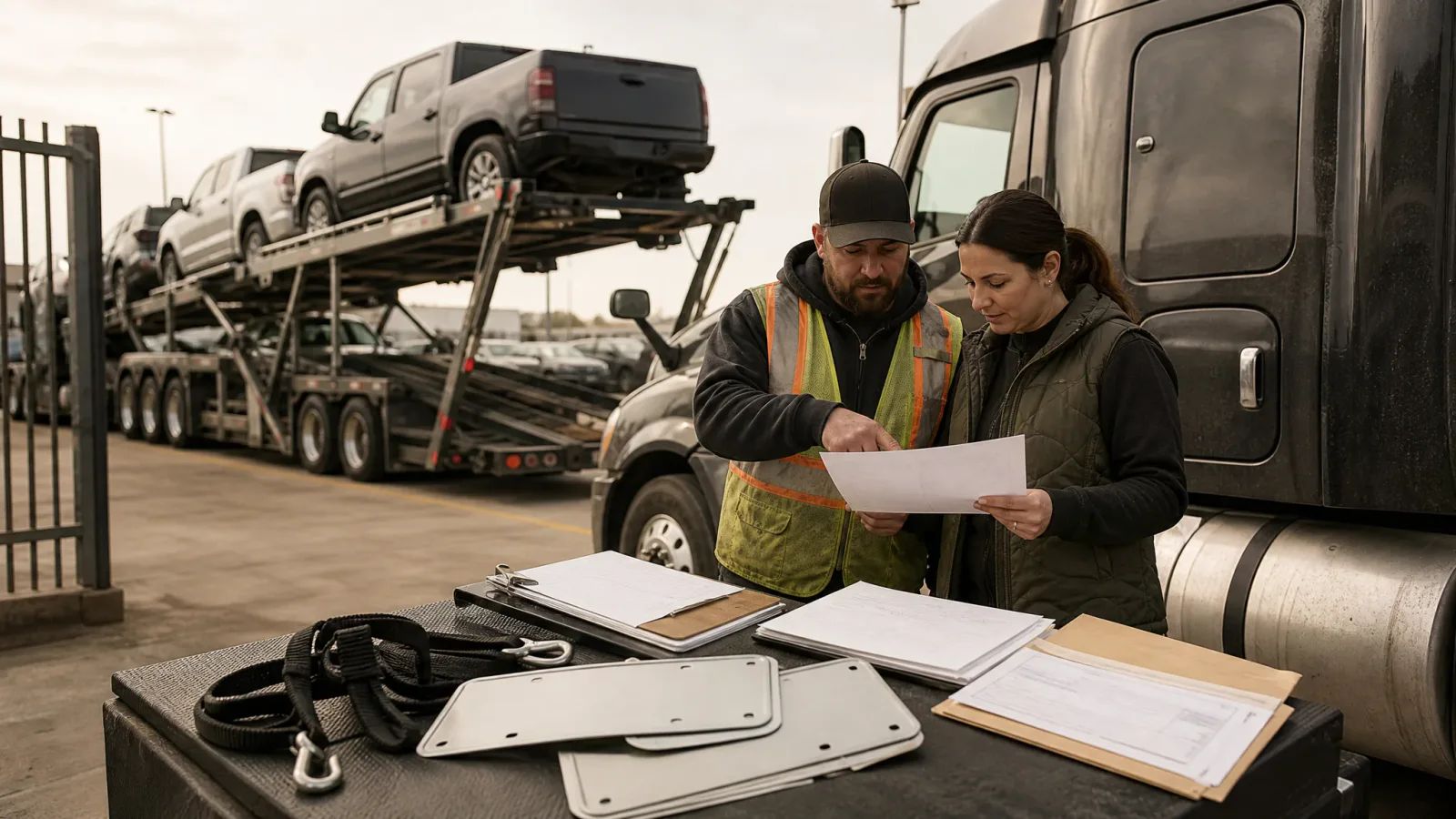
- Tractor and trailer unit numbers, license plates, and driver or carrier name when the shipper requires them.
- Pickup address, gate process, release requirements, and whether the location expects a specific carrier identity.
- Any request to substitute equipment or use another carrier after the rate confirmation was issued.
Have the pickup contact confirm the carrier name and, when practical, the tractor and trailer plate information or photos of the arriving equipment. FMCSA recommends confirming that the name and numbers on the truck showing up match the carrier that was contracted, and says truck and trailer pictures can help verify information in carrier packets. (fmcsa.dot.gov (opens in a new tab))
This identity check does not replace the driver’s inspection responsibilities. FMCSA guidance for § 396.11 states that the driver must be satisfied that both the power unit and trailer are in safe operating condition before operating the combination. Confirm current requirements directly with FMCSA and your safety adviser before relying on this workflow for compliance. (fmcsa.dot.gov (opens in a new tab))
Step 4: Test the rate and payment terms
A strong rate isn’t automatically fraudulent. A rate that is far outside your lane expectations, paired with inconsistent identity information or pressure to move money quickly, deserves a pause.
FMCSA identifies several reasons to stop a transaction: being asked to present yourself as a different carrier, being told a questionable destination is a “blind load,” a broker quickly agreeing to pay more, or a rate far above the current market rate. (fmcsa.dot.gov (opens in a new tab))
- The representative rushes you to accept before sending a complete rate confirmation.
- Payment instructions change from the company’s normal process to a personal account, unfamiliar payment app, prepaid card, or other unusual method.
- The payer named on the rate confirmation doesn’t match the company that negotiated the load, and no clear explanation is provided.
- The broker refuses to identify the shipper or delivery contact when your driver needs that information to complete the move.
- The offer includes an unusually high rate but vague vehicle details, no clear cargo release process, or pressure to bypass standard paperwork.
- You’re asked to pay an upfront fee, refund an overpayment, or send money before pickup to secure the load.
Keep the payment question specific: Who is paying the freight, what documents trigger payment, where should the invoice be sent, and does the payer match the verified company? If the answers change during the call, stop and escalate.
Step 5: Make a go, pause, or no-go decision
Use three outcomes instead of forcing every load into an immediate yes or no.
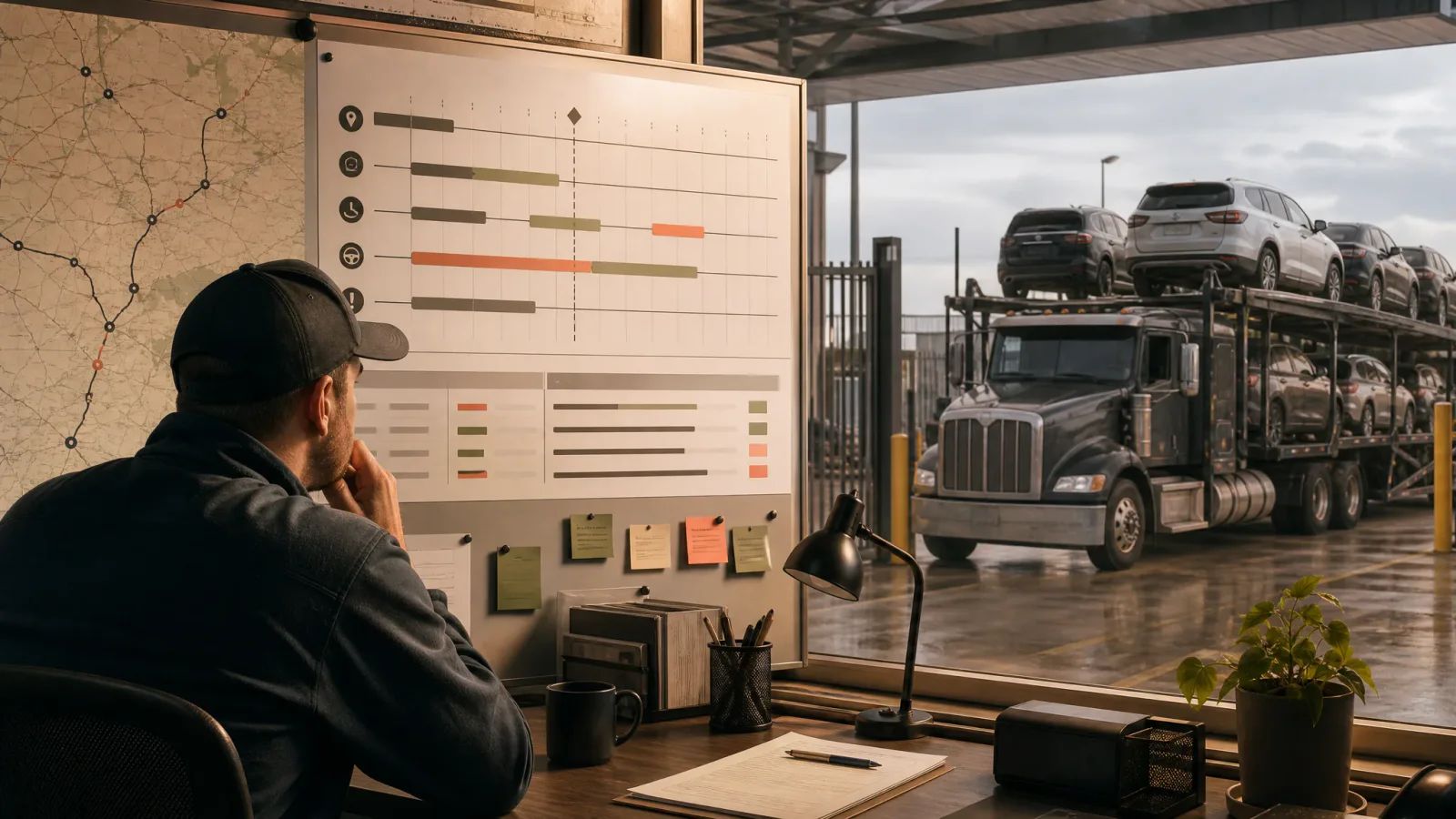
- Go: The company identity, phone numbers, authority-related information, load details, equipment, and payment instructions are consistent. Save the verification record and accept the load through your normal process.
- Pause: One item is incomplete or inconsistent, but the issue may be explainable. Do not dispatch or release the driver. Call the verified company number, contact the owner or manager, and request corrected paperwork.
- No-go: The counterparty cannot be independently confirmed, refuses a basic identity check, asks you to misrepresent the carrier, changes payment instructions without a reliable explanation, or combines multiple red flags. Decline the load and retain the communications.
If you’ve already picked up a load and suspect it was fraudulently brokered, FMCSA advises identifying who is paying the freight and asking to contact that brokerage service. Do not hold the load hostage while waiting for payment; FMCSA states that doing so is illegal. Report suspected fraud through the appropriate channels and contact FMCSA if your company is the target. (fmcsa.dot.gov (opens in a new tab))
Step 6: Retain the verification record
Save the rate confirmation, broker packet, screenshots or PDFs of the relevant FMCSA search results, call notes, email headers, payment instructions, pickup contacts, equipment details, and the final go/no-go decision. Record who approved an exception and why.
These records should stay with the trip file, not in one dispatcher’s inbox. FMCSA lists bills of lading, dispatch records, trip records, electronic communications, and settlement or payroll records among supporting-document categories, and states that required records of duty status and supporting documents must be retained for six months. Confirm current recordkeeping requirements directly with FMCSA before setting your company retention policy. (fmcsa.dot.gov (opens in a new tab))
FAQ
How can a dispatcher verify a broker before booking a vehicle transport load?
Collect the broker’s legal name, MC or USDOT information, office phone, email, address, rate confirmation, and payment terms. Compare those details with FMCSA records, call the independently listed phone number, and confirm that the load and payer match the verified company.
What are common car-haul load fraud warning signs?
Common warning signs include a rate far above the market, rushed acceptance, inconsistent phone or email details, missing authority-related information, unusual payment requests, pressure to misrepresent the carrier, unclear destinations, and equipment or carrier information that changes after booking. FMCSA specifically identifies several of these patterns in its fraud-prevention guidance. (fmcsa.dot.gov (opens in a new tab))
What should a dispatcher verify before accepting a brokered load?
Verify the counterparty identity, phone and email information, FMCSA identifiers and current registration signals, pickup and delivery contacts, vehicle count and condition requirements, assigned equipment, release process, rate, payer, invoice instructions, and detention or accessorial terms.
When should a dispatcher decline a suspicious car-haul load?
Decline when the company cannot be independently confirmed, the representative refuses reasonable verification, the paperwork and contact details conflict, payment instructions are suspicious, or you’re asked to lie about the carrier or destination. If the issue might be correctable, pause the load and require owner review before dispatch.
Editorial references
Sources checked
Requirements can change and may depend on jurisdiction, vehicle, weight, operation, and driver status. Confirm current applicability with the responsible agency or a qualified adviser.
- CompanySnapshotsafer.fmcsa.dot.gov · checked August 8, 2026
Put it into practice
Keep your operation moving with TruckTA.
Bring loads, drivers, documents, payments, and settlements into one connected workspace.