Car Hauling Vehicle Condition Checklist: Pickup to Delivery SOP
Use this car hauling vehicle condition checklist to standardize inspections, photos, signatures, delivery exceptions, damage escalation, and proof-of-delivery closeout.
By TruckTA Editorial Team · TruckTA Resources
In this article
- 1. 1. Set the record before the vehicle is loaded
- 2. 2. Use the car hauling vehicle condition checklist at pickup
- 3. 3. Build a photo set that another person can use
- 4. 4. Control the handoff between driver, dispatch, and customer
- 5. 5. Handle a delivery discrepancy without arguing at the gate
- 6. 6. Use a defined car hauler damage escalation procedure
- 7. 7. Close the car-hauling proof-of-delivery file
- 8. Company SOP conversion checklist
- 9. Frequently asked questions
- 10. Related TruckTA resources
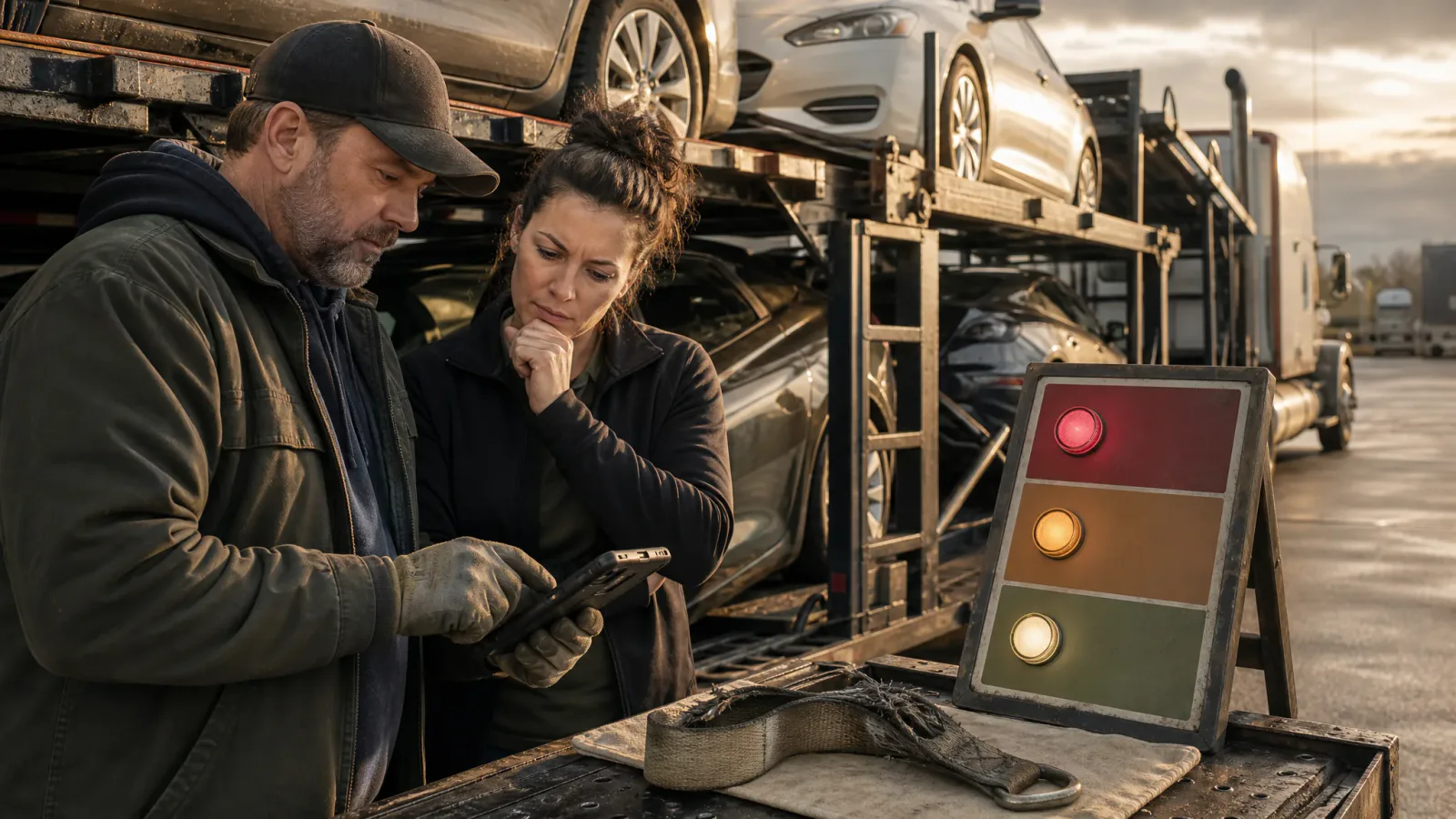
A clean pickup can turn into a disputed delivery when the condition record is incomplete, the photos can’t be matched to the vehicle, or the driver and dispatch team don’t agree on who owns the next step. A car hauling vehicle condition checklist gives your fleet one repeatable handoff process—from pickup inspection through delivery closeout.
This SOP is designed for car haulers, dispatchers, fleet owners, and operations managers. It focuses on controlling the record and the communication. It doesn’t make a legal finding about liability or determine whether a damage claim should be paid.
1. Set the record before the vehicle is loaded
The driver should start with the shipment record, not the camera. Before beginning the walk-around, confirm that the vehicle identification and load information match the dispatch board and paperwork.
- VIN or the company’s approved vehicle identifier
- Year, make, model, color, and license plate when available
- Pickup location, delivery location, customer or facility contact, and appointment details
- Operating status: running, non-running, restricted movement, or other approved notation
- Existing condition report or prior exception record, if the vehicle has already changed hands
- Keys, remotes, loose equipment, personal-property notes, and customer instructions
- Driver name, truck or trailer identifier, inspection date, time, and location
If the VIN or vehicle description doesn’t match, stop the handoff and contact dispatch before loading. Don’t fix it later from memory. A mismatched identifier can attach the wrong photos or damage notes to the wrong unit.
This condition record supplements, rather than replaces, applicable cargo securement and inspection requirements. FMCSA states that the motor carrier and driver are responsible for ensuring cargo is properly loaded and secured. Verify current requirements before making this workflow part of a controlled SOP.
2. Use the car hauling vehicle condition checklist at pickup
The pickup inspection should be a controlled walk-around with the vehicle stationary, accessible, and visible enough to inspect. If lighting, weather, congestion, or the facility layout limits the inspection, record that limitation as an exception and notify dispatch before departure.
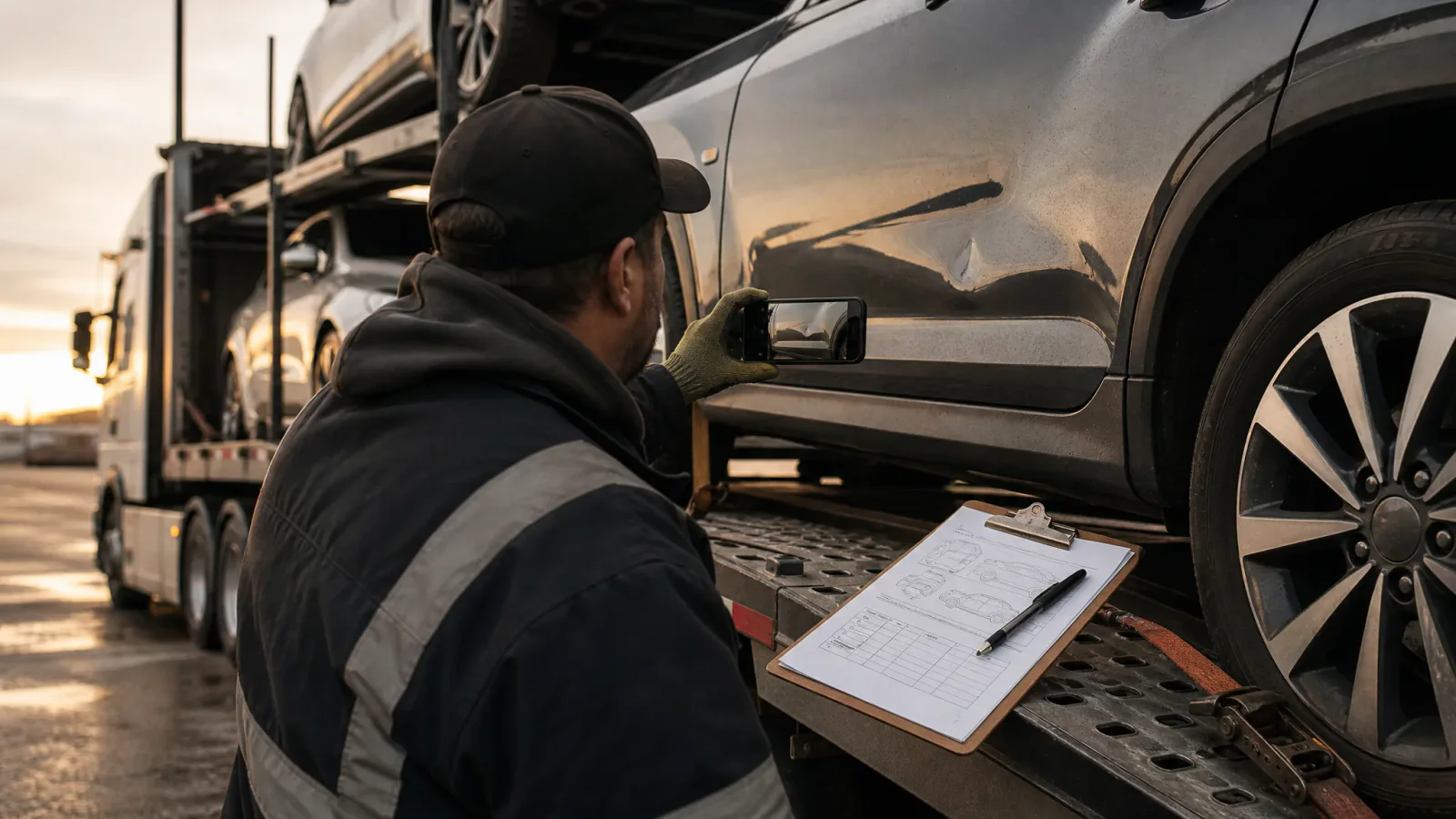
Record condition by location, not by vague overall comments. “Scratched” is weak. “Three-inch scrape on the left rear bumper, below the reflector” gives the next person something to compare.
- Front bumper, grille, hood, headlights, windshield, and roof
- Left side from front to rear, including wheels, mirrors, doors, rocker panels, and glass
- Right side from front to rear, using the same sequence
- Rear bumper, trunk or liftgate, taillights, exhaust area, and rear glass
- Wheels, tires, visible underbody components, and obvious fluid or mechanical concerns
- Interior condition when the customer instructions or facility process requires it
- Odometer reading, fuel or charge level, and operational status when available
Use a condition diagram or standardized damage codes if your fleet has them. If not, require plain-language notes that identify the panel, approximate size, damage type, and whether the mark appears fresh, old, repaired, cracked, dented, chipped, missing, or otherwise abnormal. Don’t diagnose cause. Document what you can see.
3. Build a photo set that another person can use
Photos should support the written condition report, not replace it. Take enough images to establish vehicle identity, overall condition, and close-up detail. The exact number can vary by fleet policy, but the sequence should stay consistent.
- Capture full front, rear, left-side, and right-side views.
- Photograph the VIN plate or another approved identifier when permitted and practical.
- Take a medium-distance image showing each damage area in relation to the vehicle.
- Take a close-up image that shows the size and character of the damage.
- Photograph exceptions such as missing parts, warning lights, broken glass, low tires, fluid leaks, or loading limitations.
- Confirm that the images are attached to the correct shipment record before leaving the pickup location.
Avoid photos that are dark, blurred, blocked by another vehicle, or so close that the reviewer can’t tell where the damage is. If a photo fails, retake it before the vehicle is loaded. When a facility prohibits photography in certain areas, record the restriction and follow the customer’s approved alternative process.
4. Control the handoff between driver, dispatch, and customer
The driver owns the first-hand observation. Dispatch owns the shipment record and communication flow. The customer, dealer, auction, or facility representative confirms the handoff when the site’s process allows it. Each role needs a defined action so an exception doesn’t sit in a text thread or get lost in a phone call.
- Driver: inspect, photograph, record, obtain acknowledgment when available, and report exceptions before departure.
- Dispatch: review incomplete or conflicting records, attach documents to the load, notify required contacts, and track open exceptions.
- Operations or claims reviewer: compare pickup and delivery records and decide what additional documentation is needed.
- Customer or facility representative: review the condition record and identify disagreement before signing, when practical.
A signature confirms that the handoff was presented and reviewed; it doesn’t eliminate the need for clear notes. If the representative refuses to sign, write “signature refused,” record the person’s name or role if available, photograph the vehicle and location as permitted, and notify dispatch immediately.
5. Handle a delivery discrepancy without arguing at the gate
When the receiver identifies damage or a condition difference, the driver should stay factual and keep the delivery process controlled. Don’t debate cause, promise payment, or write an admission that the company hasn’t authorized.
- Pause the final acknowledgment long enough to compare delivery condition with the pickup record.
- Identify the exact location and describe the observed condition in neutral language.
- Take delivery photos using the same angles and close-up approach used at pickup.
- Ask the receiver to review the written exception and sign or acknowledge it when possible.
- Contact dispatch before the truck leaves if the discrepancy is material, disputed, or connected to a safety or operability concern.
- Upload the revised condition record, photos, names, time, and communication notes to the shipment file.
If the vehicle can’t be safely moved, the receiver refuses access for inspection, or the facility requires the unit to be moved before documentation, dispatch should give the driver a documented instruction. The file should show who made the decision, when it was made, and what inspection opportunity remained available.
6. Use a defined car hauler damage escalation procedure
Not every scratch needs the same response. Your escalation matrix should separate routine pre-existing damage from a new, disputed, or operationally significant exception.
- Routine pre-existing condition: document it, obtain acknowledgment, and close the pickup record.
- Unclear comparison: hold the file open for dispatch or operations review and request additional photos or notes.
- New or disputed damage: notify the designated operations or claims contact before final closeout, preserve the original pickup record, and attach the delivery exception.
- Safety or operability concern: stop movement when required by the condition and follow the fleet’s safety escalation process.
- Refused inspection or signature: record the refusal, identify witnesses or facility contacts when available, and escalate before departure.
The reviewer should compare the pickup report, pickup photos, delivery report, delivery photos, driver notes, facility notes, and relevant communications. The review should produce an internal disposition such as pre-existing, no discrepancy confirmed, additional information required, customer exception accepted for review, or escalated to the designated claims or management contact. That disposition isn’t a legal conclusion.
7. Close the car-hauling proof-of-delivery file
A delivery isn’t closed when the driver pulls away. It’s closed when the record is complete, matched to the correct vehicle, and available to the people who need to review it.
- Final signed or acknowledged proof of delivery
- Pickup and delivery condition reports
- Pickup and delivery photo sets attached to the correct unit
- VIN or shipment identifier confirmation
- Names, roles, dates, times, and locations for pickup and delivery contacts
- Notes for signature refusal, inspection limitations, gate delays, rerouting, or other exceptions
- Open damage or exception reference number, if applicable
- Dispatch and operations communication log for material discrepancies
- Final delivery status and closeout timestamp
Use one naming convention across paper and digital records. A practical format is shipment number, VIN or unit identifier, event type, and date—for example, “Load-4821_VIN-last8_Pickup_2026-08-03.” Keep original images and signed records together. Don’t overwrite the pickup report after delivery; add the delivery record as a separate event.
Company SOP conversion checklist
Convert this draft into your fleet’s controlled SOP by assigning an owner to every handoff and defining the required record at each step.
- Name the approved condition-report form and photo standard.
- Set the minimum pickup and delivery fields required before a load can be closed.
- Assign dispatch, driver, operations, and claims responsibilities.
- Create an escalation contact list with after-hours coverage.
- Define how signature refusals and inspection limitations are recorded.
- Set the file naming, storage, access, and retention process for completed moves.
- Train drivers and dispatchers with clean, damaged, disputed, and refused-signature scenarios.
- Audit a sample of closed loads for missing photos, vague notes, unmatched VINs, and unresolved exceptions.
Frequently asked questions
What should a car hauler document at vehicle pickup?
Document the vehicle identifier, exterior condition by panel, visible wheels and tires, operational or loading limitations, keys and included equipment, odometer or fuel information when required by your process, pickup contact, date, time, location, photos, and acknowledgment or signature. Record inspection limitations instead of leaving them unexplained.
How should a fleet handle a condition discrepancy at delivery?
Compare delivery condition with the pickup record, write a neutral exception, take matching photos, obtain acknowledgment when possible, notify dispatch, and escalate material or disputed issues before the driver leaves. Don’t make an unauthorized admission or promise a claim outcome.
Who should review damage or exception records?
The driver supplies the first-hand record. Dispatch checks completeness and routes the issue. A designated operations, claims, or management reviewer should compare the full file and assign the next action. The reviewer should be separate from the person trying to rush the load to close when the exception is disputed or material.
What belongs in a car-hauling proof-of-delivery file?
Include the final proof of delivery, pickup and delivery condition reports, both photo sets, vehicle or shipment identifiers, contact and signature details, exception notes, relevant dispatch communications, escalation references, and the final closeout status.
A consistent condition handoff protects the operation from preventable confusion. Make the pickup record specific, make the delivery comparison deliberate, and make every exception visible to the person responsible for closing it.
Related TruckTA resources
Editorial references
Sources checked
Requirements can change and may depend on jurisdiction, vehicle, weight, operation, and driver status. Confirm current applicability with the responsible agency or a qualified adviser.
- law.cornell.edu referencelaw.cornell.edu · checked August 3, 2026
- law.cornell.edu referencelaw.cornell.edu · checked August 3, 2026
- law.cornell.edu referencelaw.cornell.edu · checked August 3, 2026
- law.cornell.edu referencelaw.cornell.edu · checked August 3, 2026
Put it into practice
Keep your operation moving with TruckTA.
Bring loads, drivers, documents, payments, and settlements into one connected workspace.