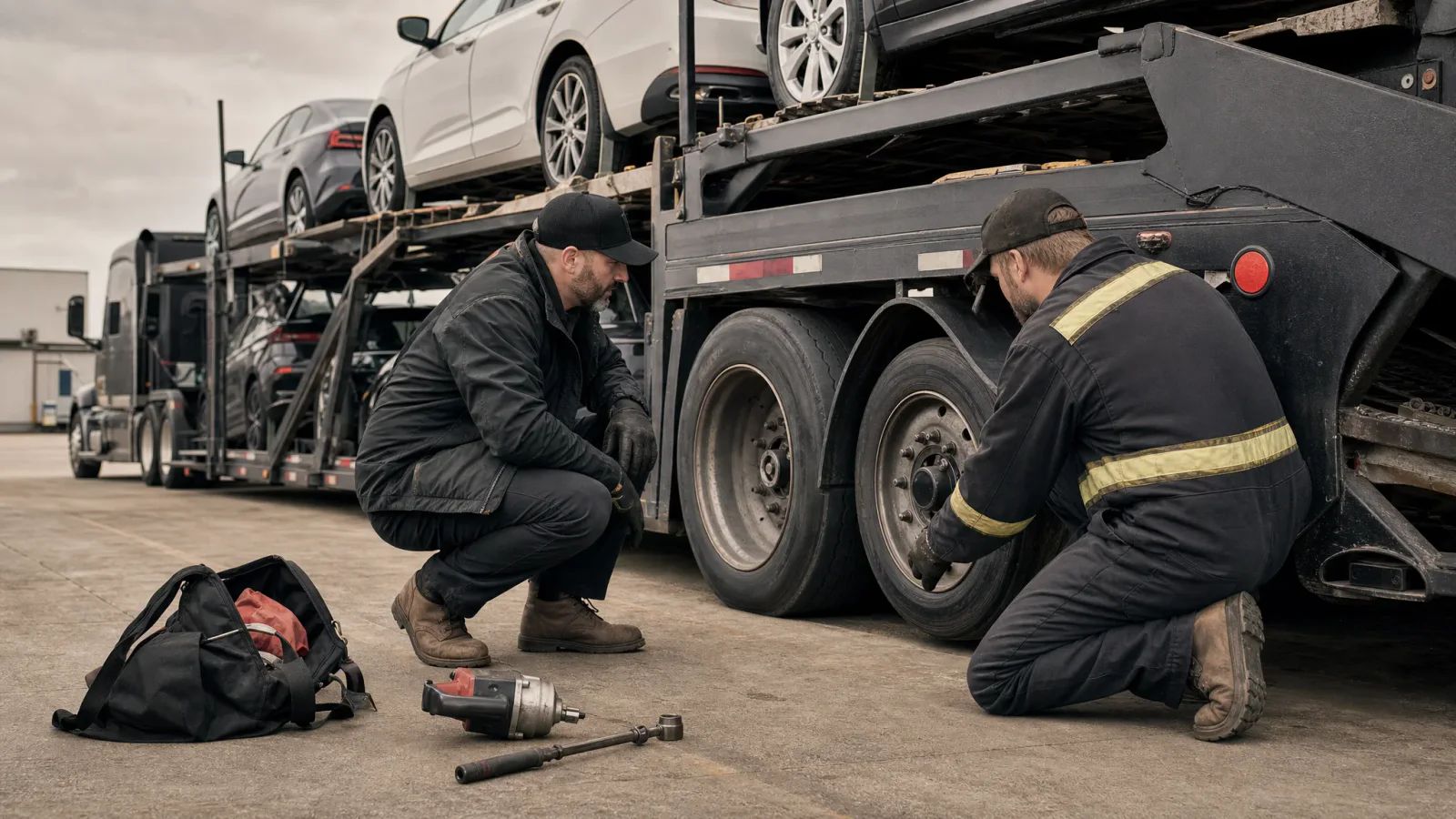
Can a Carrier Perform Its Own Annual DOT Inspection?
A carrier’s ability to inspect its own equipment depends on the inspector’s qualifications, the applicable inspection program, and the records behind the work. Here’s how to organize that decision across a multi-driver car-hauling fleet.
By TruckTA Editorial Team · TruckTA Resources
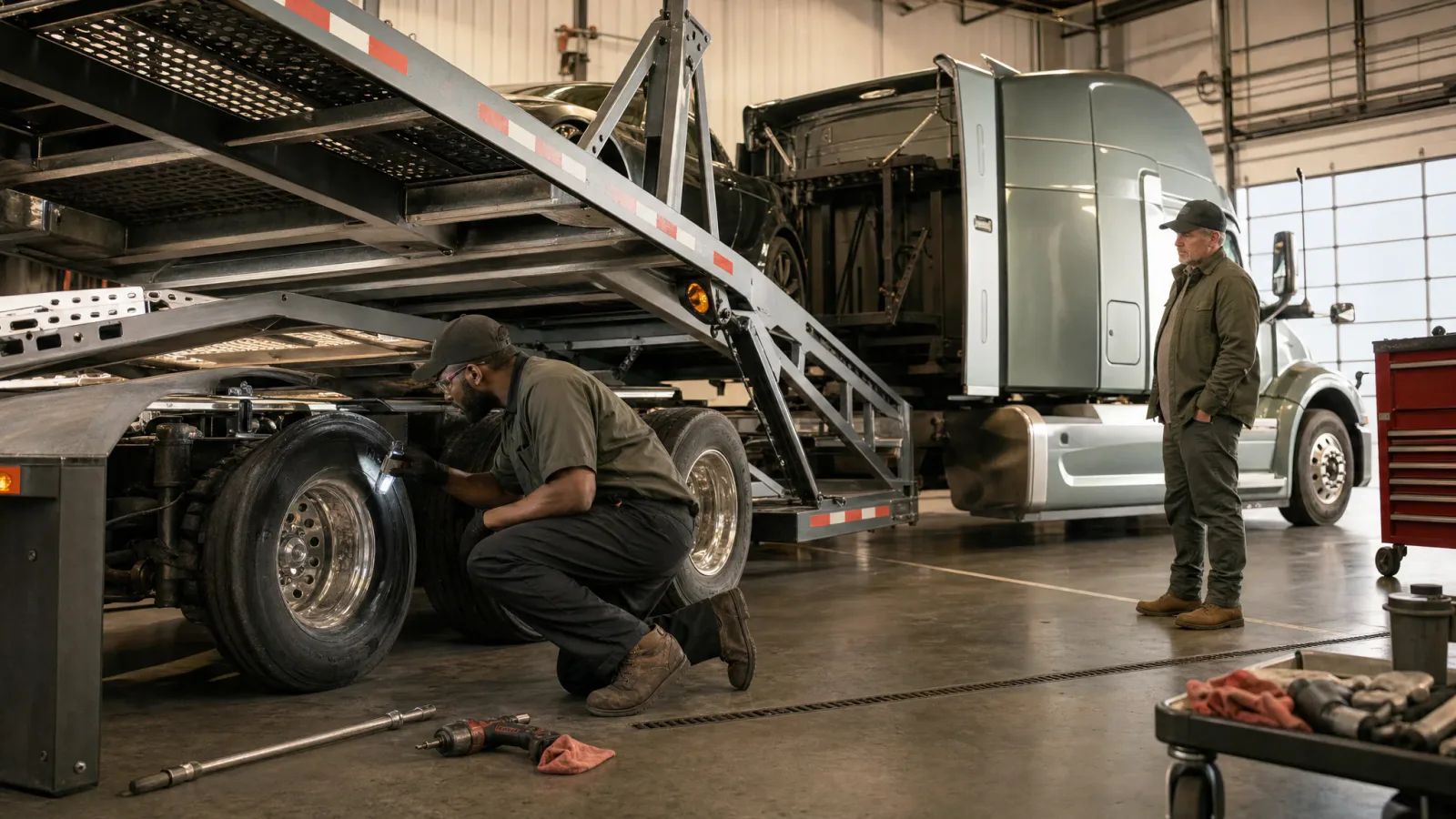
In this article
Your annual inspections are coming due, and taking every truck and trailer to an outside shop means rearranging loads. You have someone who handles maintenance. Can that person inspect the fleet’s equipment, or does the work have to go outside?
The federal answer is a conditional yes. Section 396.17(d) permits a carrier to perform annual inspections on vehicles under its control, except those subject to the inspection provision in §396.23(a)(1). The individual doing the work must meet the applicable inspector qualifications. Owning the truck isn’t the qualification. (ecfr.gov (opens in a new tab))
1. Confirm which inspection route applies to your equipment
Start with the vehicle and its inspection program, not with a blank inspection form. The federal self-inspection provision contains an express exception for vehicles subject to §396.23(a)(1). Don’t assume that permission to inspect in-house overrides a mandatory jurisdictional program. (ecfr.gov (opens in a new tab))
For each unit, ask your compliance reviewer to establish the governing requirements. Provide the registration jurisdiction, operating pattern, vehicle configuration, and existing inspection documentation. Ask whether your proposed inspector and location can perform the required inspection under that program. An unresolved answer belongs on the planning board before you schedule the work.
Keep the power unit and trailer distinct. FMCSA’s Motor Carrier Safety Planner explains that the periodic inspection applies to each vehicle in a combination and occurs at least once every 12 months. A current truck inspection doesn’t establish that the attached car-hauler trailer has been inspected. (csa.fmcsa.dot.gov (opens in a new tab))
Build a unit-level roster rather than a driver-level renewal list. Give each truck and trailer its own inspection date, report reference, planned appointment, and assigned records owner. When a driver switches trailers, dispatch should look up the replacement trailer’s record instead of carrying forward the previous combination’s status.
Also separate your inspection-route decision from the make-or-buy decision. Even when an in-house route is available, compare the labor, equipment, workspace, training, and administrative effort with an outside appointment. Include the cost of taking your maintenance person away from repairs. Saving a shop invoice isn’t useful if the work creates a bigger maintenance backlog.
2. Establish the individual inspector’s qualifications
Under 49 CFR §396.19, annual inspectors must understand the Part 393 and Appendix A inspection criteria, recognize defective components, and master the inspection methods, procedures, tools, and equipment. They must also qualify through the specified training or experience route. (ecfr.gov (opens in a new tab))
The rule provides alternatives: qualifying government-sponsored training or a qualifying state or Canadian provincial certificate; or at least one year of qualifying training, experience, or a combination. The listed experience includes commercial-vehicle mechanic or inspector work in fleet maintenance, commercial maintenance facilities, or government inspection. (ecfr.gov (opens in a new tab))
That doesn’t make a CDL, years behind the wheel, or ownership of the business a substitute for the listed qualifications. This is a practical reading of the rule’s requirements, not a separate licensing standard. Assess the person’s actual inspection knowledge and qualifying background. (ecfr.gov (opens in a new tab))
Build a qualification packet that explains the basis for your decision. Request training records, relevant certificates, a dated work history, and descriptions of the inspection or maintenance tasks performed. For an experience-based route, avoid a résumé that says only “worked on trucks.” Ask which equipment, which duties, and which dates support the proposed qualification.
Use a practical assessment as an internal management step. Have the candidate explain how they identify a defect, locate the applicable criterion, use the required tools, and record the result. Ask how they handle an inaccessible component or an unfamiliar configuration. Treat this assessment as supporting evidence, not as a substitute for the regulatory qualification route.
For an in-house inspector, §396.19(b) requires qualification evidence throughout the period the person performs annual inspections for the carrier and for one year afterward. Record the last inspection assignment so the retention period has a clear starting point. (ecfr.gov (opens in a new tab))
If you outsource, agree on access to qualification evidence before booking. FMCSA guidance permits a commercial garage or leasing company to hold that evidence for the carrier, but the carrier remains responsible for obtaining it when officials request it. Put a named contact in the vendor file instead of relying on “the shop has it.” (fmcsa.dot.gov (opens in a new tab))
3. Review brake qualifications separately
Don’t close the qualification review after checking the annual-inspector requirements. Section 396.25 separately addresses employees responsible for brake inspection, maintenance, service, or repair. It requires task knowledge, proficiency with the methods and equipment, and an applicable training or experience basis. (ecfr.gov (opens in a new tab))
The brake rule includes specified training and credential routes, or at least one year of relevant brake training or experience. It also contains a limited provision involving CDL air-brake tests for brake inspection. That provision should not be treated as blanket authority for brake repairs or as a replacement for annual-inspector qualifications. (ecfr.gov (opens in a new tab))
Map the person to the actual assignment. If your fleet includes a tractor-carrier combination and a pickup with a gooseneck, list the brake systems and tasks involved. Ask the reviewer to determine what evidence supports each assignment. Don’t carry an approval from one task into another simply because both appear on the maintenance schedule.
Keep the brake qualification decision identifiable within the inspector’s packet. Section 396.25(e) generally calls for evidence during employment in that capacity and for one year afterward, with a specific documentation exception for qualifying CDL air-brake inspections. Have the reviewer resolve that exception rather than applying it to every brake task. (ecfr.gov (opens in a new tab))
You can divide work operationally. For example, propose an outside specialist for brake tasks your employee isn’t prepared to perform. Before using that arrangement, have the inspection provider and compliance reviewer establish responsibility for the complete inspection and its documentation. Avoid a packet where each person assumes someone else completed the remaining work.
4. Build the report packet, not just the sticker
Choose your DOT annual inspection form after reviewing the governing requirements. Section 396.21 specifies the report’s content: inspector, operating carrier, inspection date, vehicle identity, components inspected, findings, and certification of accuracy and completeness. The findings must identify components that fail the applicable minimum standards. (ecfr.gov (opens in a new tab))
FMCSA provides an annual vehicle inspection report sample through its Safety Planner. Treat a sample as a document to assess, not automatic approval of your process. Have your reviewer compare the chosen form with the current criteria and any applicable jurisdictional requirements before putting it into service. (csa.fmcsa.dot.gov (opens in a new tab))
Make the vehicle identity unambiguous. In your internal filing convention, include the unit number and VIN, even when drivers normally use a nickname for the truck. Keep the trailer’s identity equally visible. A report filed under “Mike’s rig” becomes harder to interpret when Mike moves to another truck.
Separate inspection findings from repair follow-up in the packet. Preserve what the inspector found, attach the resulting work orders, and record the subsequent inspection outcome. Don’t replace the original findings with a clean summary that hides the sequence. Give records staff a way to follow the work without reconstructing it from texts.
For an in-house inspection, §396.21 requires retaining the original report or a copy for 14 months from its date, where the vehicle is housed or maintained. The report must be available to authorized officials on demand. Build the storage process around retrieval, not merely around uploading a file. (ecfr.gov (opens in a new tab))
The onboard documentation is a separate check. Section 396.17(c) permits the report or qualifying report-based documentation, such as a decal. Alternative documentation must carry the specified inspection date, report-holder information, vehicle identification when necessary, and passing certification. A sticker alone doesn’t eliminate the report recordkeeping requirements. (ecfr.gov (opens in a new tab))
For your broader equipment-file structure, use TruckTA’s car-hauler maintenance records guide. Keep the annual report identifiable within that structure instead of blending every inspection, repair, and service event into one undifferentiated folder.
5. Give maintenance, records staff, and dispatch different jobs
In a multi-driver fleet, assign the inspection process to equipment owners within your operation, not to whichever driver happens to be available. Name one person to coordinate appointments, another qualified person to perform the inspection, and a records owner to review the resulting packet. One employee may fill several roles, but each task should remain explicit.
Give dispatch a narrow administrative check: identify the assigned truck and trailer, locate their accepted inspection records, and escalate missing or unresolved information. Don’t make a dispatcher decide whether a mechanic’s experience satisfies an inspector-qualification rule while a broker is waiting for an ETA.
Use clear internal statuses such as scheduled, inspection incomplete, repair follow-up, records review, and approved for assignment under the company process. Define who can change each status. These are suggested workflow labels, not regulatory terms or software features. Keep mechanical findings and supporting documents available behind the status.
Consider an illustrative trailer swap. Truck 12 is assigned to Driver A, but dispatch changes the trailer from Wedge 4 to Wedge 7. Your workflow should reopen the equipment-record check for Wedge 7. The prior combination’s administrative approval should not automatically transfer to the replacement trailer.
Before launching an in-house program, work through one complete packet with the people who will use it. Use the following completion list for that internal trial. It is a process check, not a substitute for the inspection itself.
Checklist
0 of 6 done
Test retrieval before expanding the program
Ask a dispatcher who didn’t assemble the packet to locate the report for a specific VIN. Then ask the records owner to find the inspector’s qualification evidence and related repair documentation. Note every missing identifier, unclear handoff, or inaccessible file. Fix those problems before repeating the process across the fleet.
Use the fleet vehicle inspection checklist for the separate readiness workflow, and the Car-Hauling Safety and Compliance Guide to place this decision within your wider operating review. Keep this annual-inspector decision focused on qualifications, the applicable program, and its evidence.
Explore TruckTA compliance records with one real truck-and-trailer packet. Assess Documents and inspection records against your filing and retrieval needs, while keeping company checks separate from inspector qualification decisions. Before rollout, have your designated reviewer confirm current requirements and resolve every open applicability question.
Editorial references
Sources checked
Requirements can change and may depend on jurisdiction, vehicle, weight, operation, and driver status. Confirm current applicability with the responsible agency or a qualified adviser.
- csa.fmcsa.dot.govcsa.fmcsa.dot.gov · checked November 9, 2026
- SubSectionscsa.fmcsa.dot.gov · checked November 9, 2026
- Section 396ecfr.gov · checked November 9, 2026
- Section 396ecfr.gov · checked November 9, 2026
- Section 396ecfr.gov · checked November 9, 2026
- Question 1 may entity other motor carrier maintain evidence inspector qualificationsfmcsa.dot.gov · checked November 9, 2026
- www.ecfr.govwww.ecfr.gov · checked November 9, 2026
Put it into practice
Keep your operation moving with TruckTA.
Bring loads, drivers, documents, payments, and settlements into one connected workspace.